
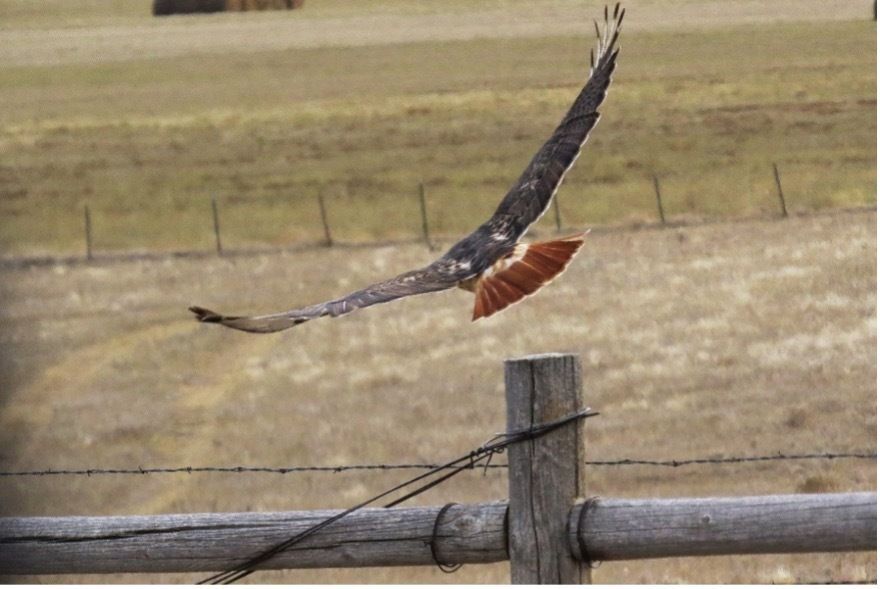
When you see an unknown hawk, the first question to ask yourself is, "Am I seeing a Red-tailed Hawk, or something else?"
Article and photos by Bill Bossman
We have all seen a hawk from a distance — either perched or flying overhead — and wondered what kind of hawk it is. Maybe you are on a hiking trail and see a bird at the top of a tree on the other side of a lake or ravine, and a closer view is impossible. Maybe you are driving down the road at 65 mph and only catch a brief glimpse as you pass by. Is there any way to identify those birds without getting closer or using a spotting scope? The hopeful answer is, “Yes, most of the time you can.” The Red-tailed Hawk is the most common species of hawk throughout most of North America, especially in Eastern Nebraska, so the first question to ask yourself is this: “Am I looking at a Red-tailed Hawk, or something else?” Fortunately, with a little knowledge and patience, you can learn to confidently determine whether or not your bird is a Red-tailed Hawk. But what if you discover it is not a Red-tailed Hawk? Well, then it’s back to studying the field guides and maybe reaching out for advice from others.
Key Field Marks
Several key field marks can be used to identify a Red-tailed Hawk. The usefulness of each of these marks depends on your view of the bird. The photos accompanying this article may help you to visualize what to look for when studying a hawk out in the field.
If you see a perched bird from the front, look for a bellyband of darker feathers on a light-colored belly. Almost every Red-tailed Hawk will show a visible bellyband.
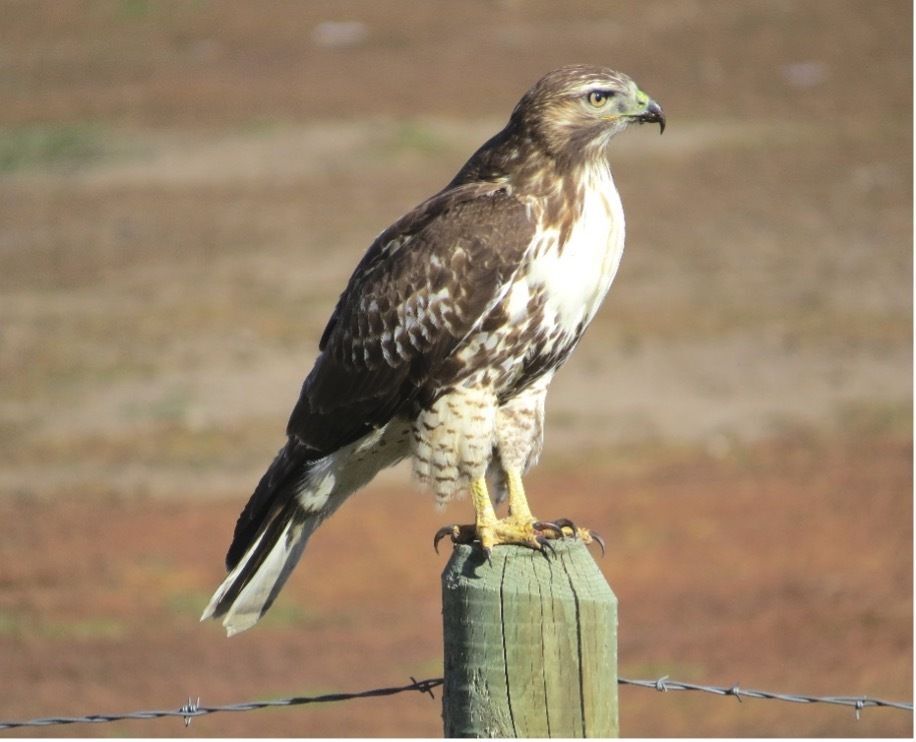
Red-tailed Hawk with dark bellyband visible.
When a perched bird is viewed from the back, look for whitish feathers on a dark-colored back. These white feathers typically form a V shape across the bird’s back. This mark is called the “scapular V.” One bird writer referred to this mark as “backpack straps” — so if it helps, picture the bird carrying a backpack.
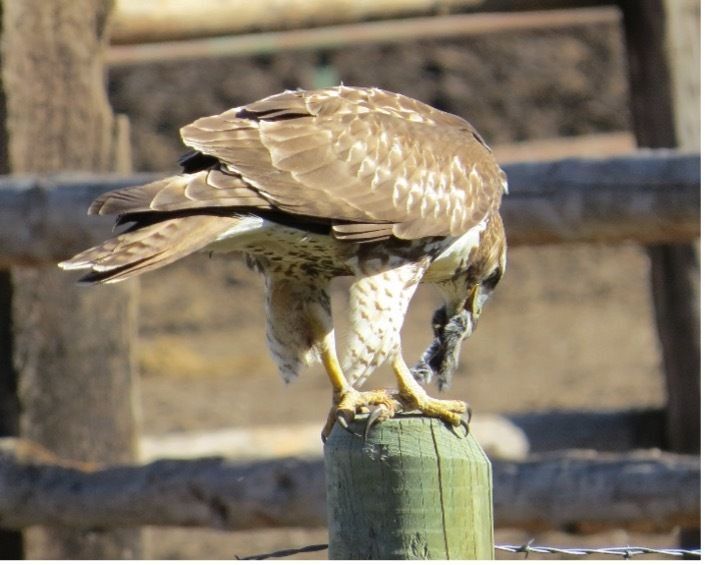
Immature Red-tailed Hawk with bare legs, white "scapular V" markings on back, and lightly banded tail.
If the bird is in flight, look for the dark line of feathers on the leading edge of the underside of the wings (known as patagial bars.) Those markings are a clear sign you are looking at a Red-tailed Hawk. The bird’s name implies the presence of a red tail, but not every Red-tailed Hawk has a red tail. The tail of a first-year bird is brownish with dark, narrow bands. The young birds will molt at the end of the first year and acquire the iconic red tail of an adult. An additional field mark that can be used to distinguish Red-tailed Hawks from other hawks is the Red-tailed Hawk’s bare legs, or tarsi. Two closely related species, Ferruginous Hawk and Rough-legged Hawk, as well as Golden Eagles, have legs that are feathered down to the feet.
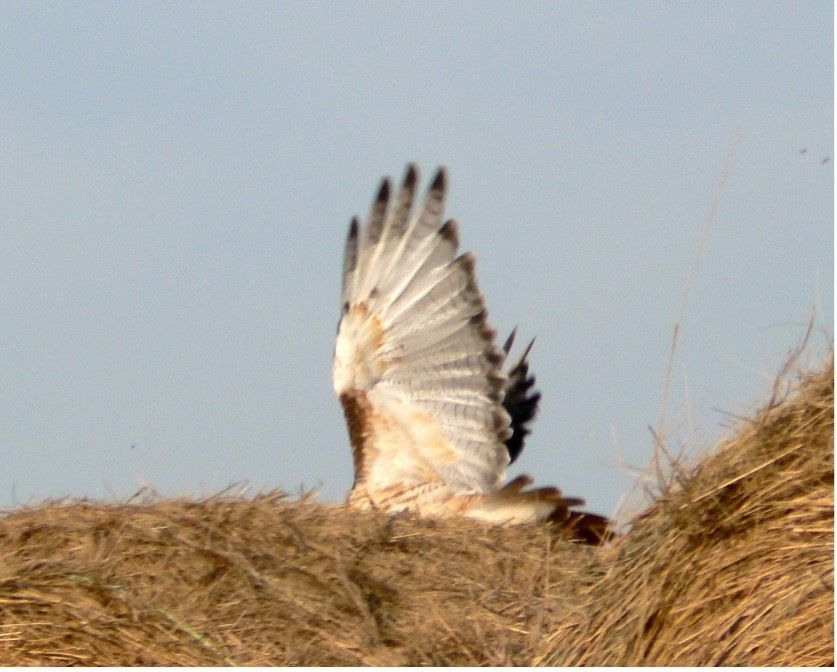
A Red-tailed Hawk with dark patagial bars on the underside of the wing.
Sub-species and Color Morphs
There are a half dozen or so subspecies of Red-tailed Hawk, mostly found in distinct regions of the country. In Nebraska we often see several subspecies. In addition, many subspecies have light and dark plumage variations, or color morphs. Learning these subspecies will help when looking at a strange bird in the wild. The Harlan’s subspecies breeds in northern Canada, and is the only Red-tailed Hawk without a red tail. These birds are mostly dark with monochromatic, black-and-white mottling. The Krider’s subspecies breed from central Canada down to South Dakota. They have mostly white heads and undersides with large patches of white on the back. Several sub-species also have dark morph birds that are sometimes nearly all black.
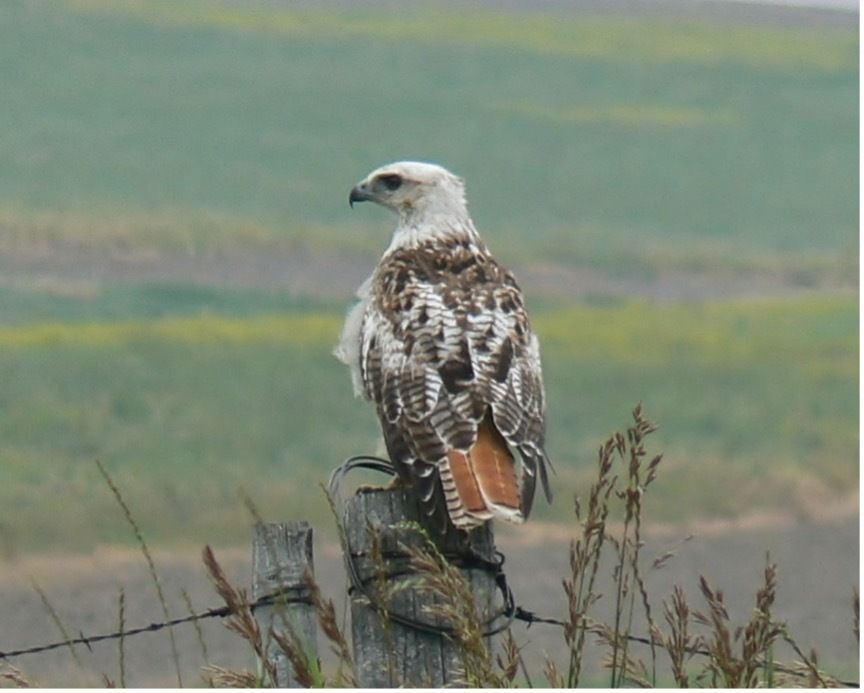
Krider's subspecies of Red-tailed Hawk
Closely examine the large hawks you encounter and try to see if they meet some or most of the hallmarks of a Red-tailed Hawk. Very often you will realize that the bird is indeed a Red-tailed Hawk.


