
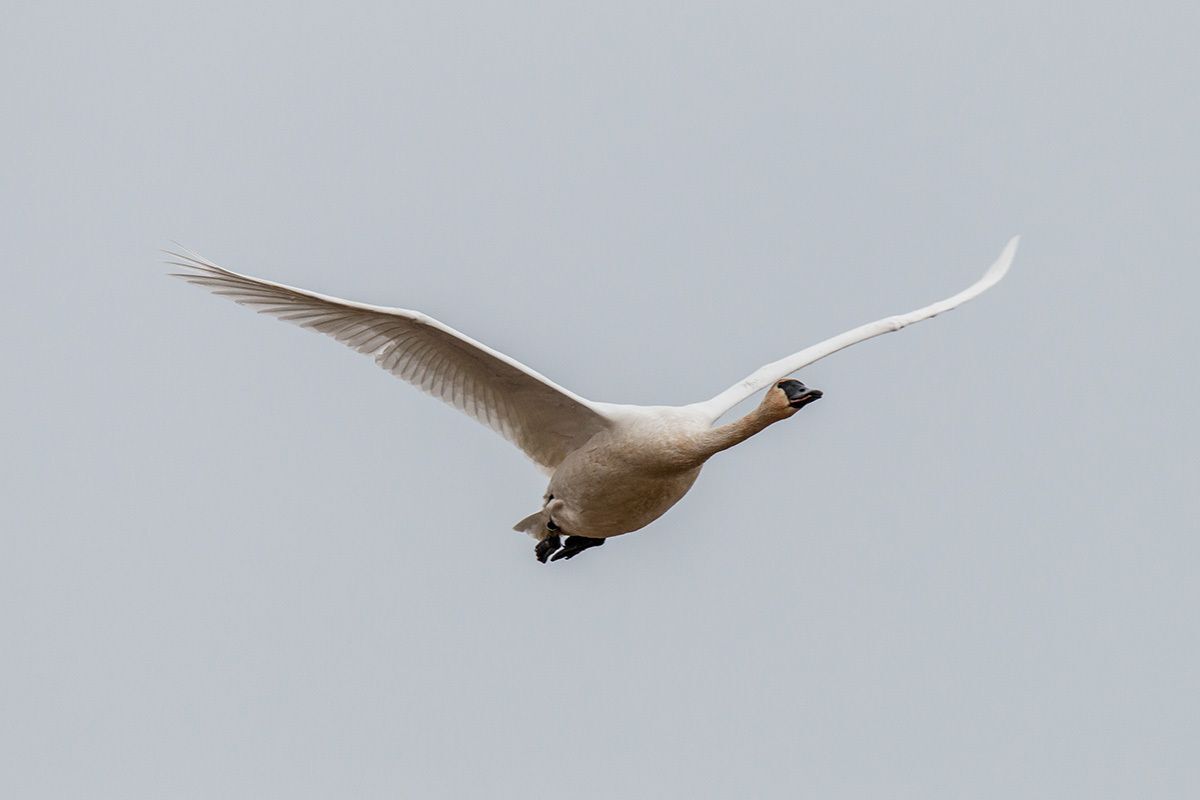
Recently I found myself watching the film Dinosaur (2000) — a Disney-animated movie that my three-year-old adores. When winged dinosaurs flew in picturesque flocks over a majestic lake, I was surprised to hear a familiar braying call. It took a moment to place it, but I realized that the moviemakers had given these long-necked dinos the voices of their modern long-necked counterparts: Trumpeter Swans. While this mostly boils down to movie producers wanting a good animal sound to use, the link between fossil species of dinosaurs and living birds is quite real. When the days are short and weather bleak, it’s a nice source of wonder to remind myself that the birds toughing out Nebraska’s chill have ancestors that survived the asteroid impact 66 million years ago, who then had descendants that survived ice ages, global droughts, and all manner of calamities. Birds are tough, and winter is one of the best times to see them showing their stuff!
The Trumpeter Swan is just one of many species that call Nebraska home in January and February. Though they’re able to make themselves cozy in near-freezing water, Trumpeter Swans have needed human help to persist. The species almost disappeared after centuries of overhunting. Conservation successes in boosting Trumpeter Swan numbers further north have made them a more common midwinter sight and sound in the Omaha metro area. Along the Platte and Missouri Rivers and lakes within the river valleys, listen for their iconic brassy hoots. Wetland conservation in Nebraska, particularly the Sandhills, has helped the species return to historic summer breeding areas in our state, making Trumpeter Swans more of a year-round resident than they have been in decades. Other waterfowl species to watch for include Northern Shoveler, Ring-necked Duck, Common and Hooded Merganser, and Common Goldeneye.
For songbirds, midwinter is a time for scrounging seeds and dried fruits wherever they can find them in the landscape. Red-breasted Nuthatches, wandering southward due to limited food sources this year in Canada, have been popping up in the Midwest seeking out conifer seeds. Black-capped Chickadees manage to find a banquet of dormant insects and their eggs in what might look like barren winter bark to us humans. Winter finches such as Pine Siskins appear in a flurry at bird feeders, seeking out favorite dishes such as nyjer seeds, and then vanish as fast as they came.
If your familiar feeder birds disappear for a bit, try not to worry too much. In winter, mixed species flocks of songbirds move from place to place seeking out food and staying one step ahead of predators such as Sharp-shinned Hawks (a.k.a. “Sharpies”) that fly swiftly in wooded backyards seeking out smaller birds. And if you think about it, witnessing the hunting prowess of a Sharpie is just as much a part of backyard birding as the songbirds themselves. If songbirds are flourishing in your backyard, eventually you’ll see other parts of the food web appear to join in the fun. I’m thinking of another Disney film that begins with an Elton John composition called “The Circle of Life…”
Well, I’ve clearly got kids’ movies on the brain. I’ll leave you with the observation that birds are magnificent survivors, but they’ll appreciate any help from us, especially in the fiercest weather of the year. It’s a good time to reflect on the importance of habitat and how some species depend on continued good stewardship of wetlands, grasslands, and other ecosystems in short supply. At home, providing water (with a heated fountain), cleaning bird feeders, and offering natural food sources and shelter all help birds make it through to the spring and the next breeding season — and they’re surefire ways of making your yard a winter bird hotspot.


