
Photo by Diana Robinson
Crunch, crunch, crunch. In the darkness of the early morning, my tour group and I stayed silent as we trudged along the pebbly path at Rowe Sanctuary. Slowly, we followed the red glow of our guides’ flashlights as we headed toward the bird blind. Every spring, migrating Sandhill Cranes make a stop in central Nebraska for food and rest before they head north to their nesting grounds. We were here to see them!
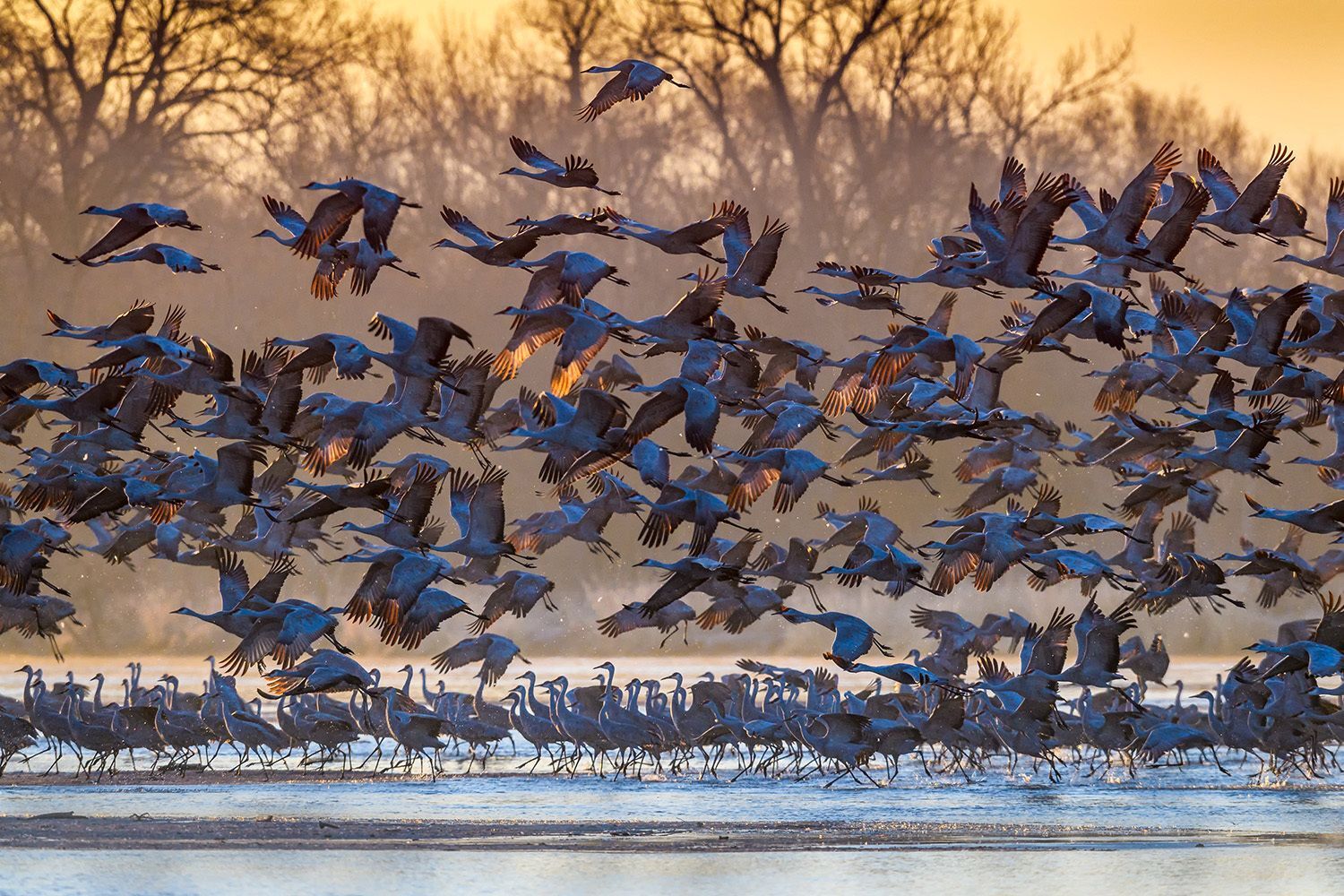
The Sandhill Cranes murmured in the dark as we found our spots at the blind. My eyes strained to see shapes out on the water but it was hard to tell what I was looking at. As the sun began to rise over the Platte River, the small dark shapes began to transform into hundreds of thousands of individual birds. The murmuring in the air turned into a symphony of honks and calls as the birds woke up.
Over the course of two hours, we watched the cranes wake from their slumber and fly off in humongous groups. It is difficult to describe the sound of their wings and the sight of thousands of birds taking flight. Wave after wave of cranes flew off to the nearby fields to eat for the day. The bird blind’s close location offered us a spectacular view. It simply is just something you have to experience yourself!
I moved to Nebraska last year. One of the first things on my to-do list was to see the Sandhill Cranes. There are only two species of cranes found in the United States. One is the Whooping Crane, an endangered species with about 800 birds in the wild. The other is the Sandhill Crane. In contrast, there are more than 1 million Sandhill Cranes estimated to live in North America. While some subpopulations of Sandhill Cranes are endangered in Mississippi and Florida, the migrating Sandhill Cranes hold a status of “Least Concern” under the International Union for Conservation of Nature (IUCN).
Despite the cranes’ stable population, environmental conditions can be less predictable. The weekend I went to visit the cranes was exceptionally warm. High temperatures reached over 90 degrees and many people that I spoke with speculated whether the unusual temperatures were affecting the birds. Climate change has affected bird behavior on the Platte before, and there are questions about what migration will look like in the future. Experiencing a sunrise with the Sandhill Cranes was unforgettable, but it was also an important reminder to protect precious ecosystems like the Platte River. I hope everyone can experience seeing these amazing birds, not just next year but for many generations to come.


