
By Rebecca Carrillo
A steady river flows east of Omaha. Birds fly overhead, dipping low above the silt-colored water. “Big Muddy,” otherwise known as the Missouri River, is the longest river in the United States. It starts at the convergence of three smaller rivers in Montana, at the base of the chilly Rocky Mountains. From there, it stretches more than 2,500 miles, traveling through the Great Plains all the way to St. Louis, Missouri. Many different types of wildlife, including birds, can be found in and around the river. A major biodiversity hub, the Missouri River provides food, shelter, resources, and habitat for hundreds of bird species. Among them are songbirds, raptors, waterfowl, and shorebirds. It also supports many threatened and endangered species, such as the Bald Eagle, the Piping Plover, and the Least Tern.
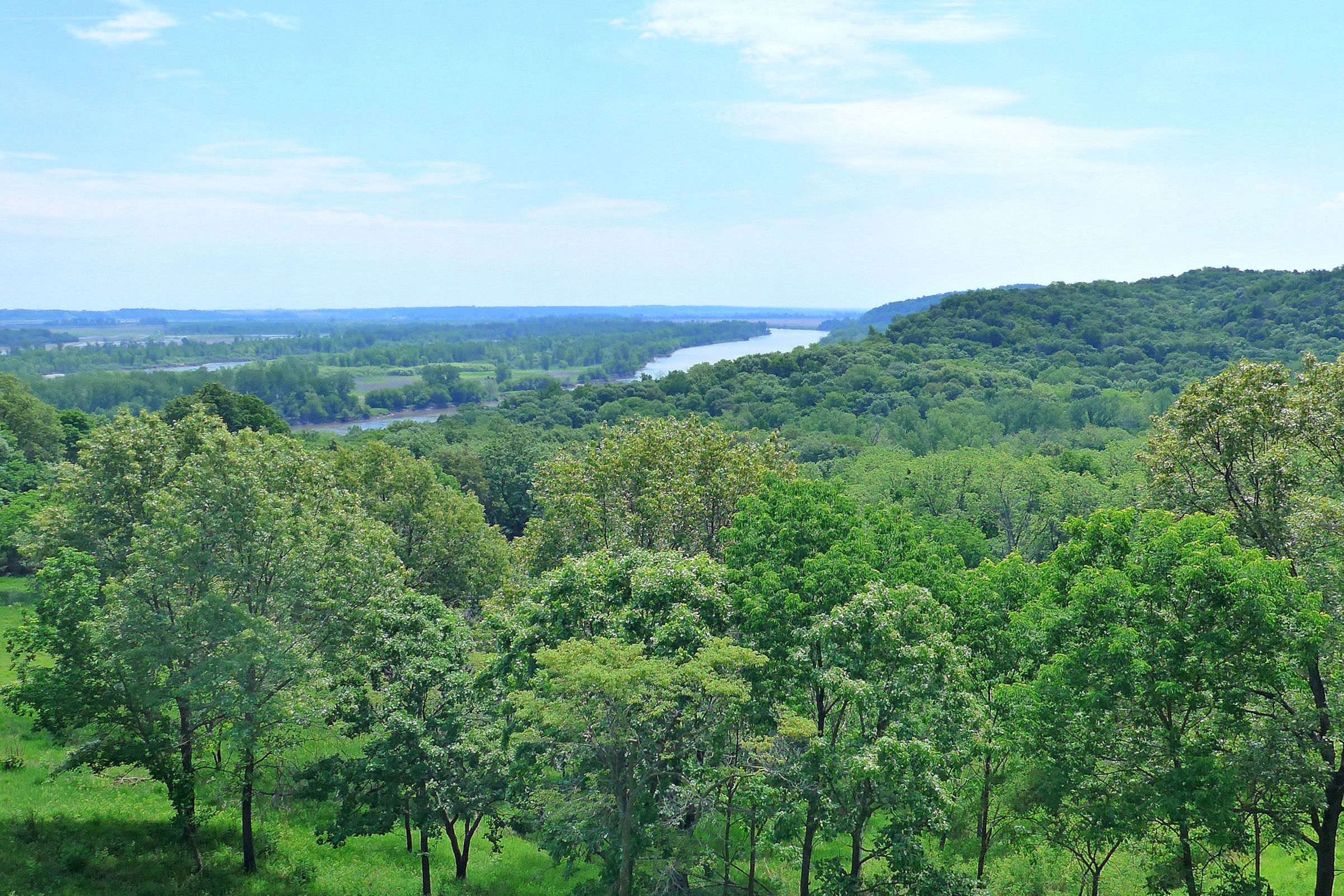
The Missouri River is a powerful force, carving through stone over the course of thousands of years. The river’s flow cuts through a series of natural formations known as ‘bluffs’. These bluffs look like steep, rolling cliffsides, exposed with layers of rock and soil. Nebraska’s bluffs stretch from Ponca State Park in the northeast to Indian Caves State Park in the southeast. On the Iowa side of the river, the unique Loess Hills are made of ancient windblown silt, with some of the slopes towering over the floodplain. Bluffs provide important habitat for birds. Some species, such as the Bank Swallow, burrow into the soft and sandy parts of a bluff, carving out small holes for nests. Other birds, such as the Wild Turkey or the Eastern Whip-poor-will, live on top of the forested bluffs. According to Audubon Great Plains, forested bluffs are home to a wide variety of birds, including Red-headed Woodpecker, Yellow-throated Vireo, Wood Thrush, Ovenbird, American Redstart, Eastern Towhee, Scarlet Tanager, Rose-breasted Grosbeak, Orchard Oriole, and Baltimore Oriole.
As the river winds across the land, floodplains and wetlands take shape below the bluffs. These ecosystems are highly complex and constantly shifting. The Missouri River once had a vast network of braided channels and streams. Due to human engineering and urbanization, much of the river is now channelized. Nonetheless, tributaries such as the Platte River and side channels like Boyer Chute continue to provide crucial shallow-water and wetland habitats. DeSoto National Wildlife Refuge is an excellent place to see shorebirds and waterfowl in the Missouri River floodplain. Migrating waterfowl stop at the refuge’s wetlands in the spring before heading further north. Snow Geese, Trumpeter Swan, Green-winged Teal, American Wigeon, and Northern Pintail are just a few of the many species that rely on this environment. Other duck species, waders, hawks, and grassland birds can also be found there.
From bluffs to wetlands to the open river water itself, the Missouri River is a unique landscape, especially for birds. Each individual ecosystem supports a diverse community of wildlife. The next time you visit one of the parks or refuges along the river, look out for the birds and appreciate the range of species living there. You never know what you might see!
Photo: Missouri River bluffs and valley as seen from Indian Caves State Park | Photo by Ali Eminov


