
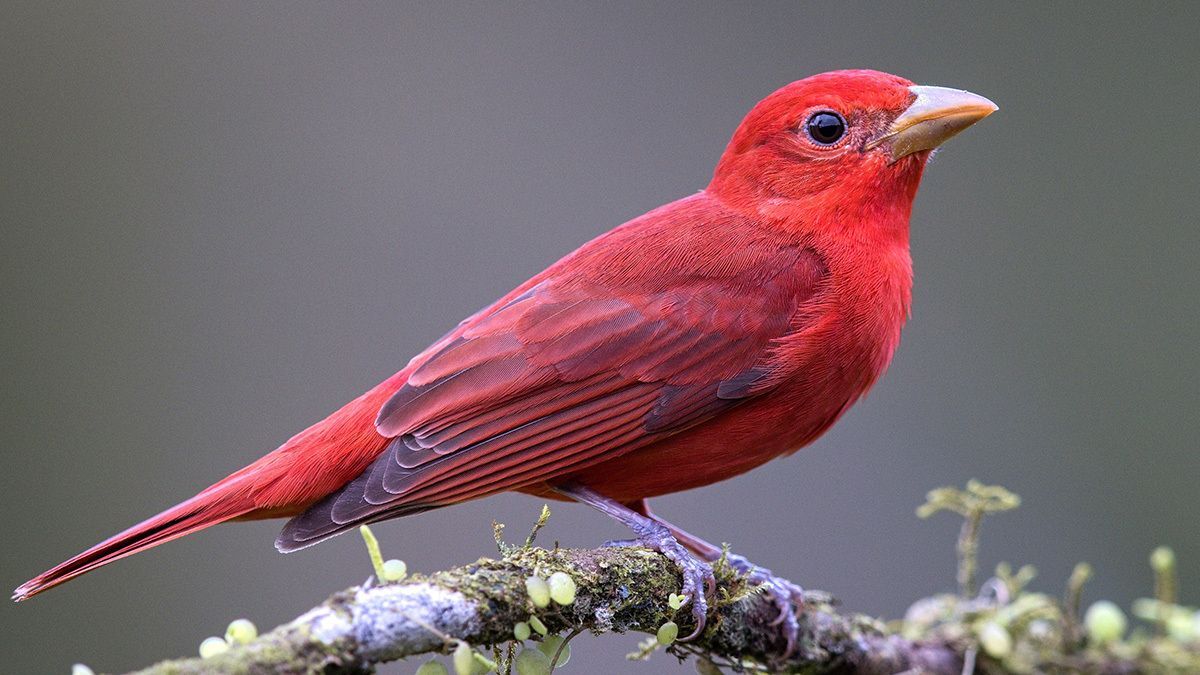
Photo: Summer Tanager (male) by Andre Chudy
Why not make this the summer of the Summer Tanager? It’s in the name, after all! Redder even than a Northern Cardinal, a male Summer Tanager high in the canopy makes a stunning contrast with the deep green leaves. Females, no less colorful, are bright yellow. They’re distinguished from the similar Scarlet Tanager by their wings (Scarlet Tanagers have black/dark gray ones) and by their voices (each species has a unique call, though their songs both sound somewhat like that of the American Robin. Check out recordings on Cornell’s All About Birds website to get a sense for them.)
Broadly speaking, we’re in the tallgrass prairie region, but the Omaha metro area also features wooded bluffs and the Loess Hills — read Rebecca Carrillo’s ASO Wildlife Guide on our unique river bluff habitats for more. These forested slopes provide homes for species such as tanagers that would be at a loss nesting in a grassland. Check out Hummel Park, Fonetenelle Forest, or Neale Woods if you want to see and hear tanagers. Summer Tanagers’ preference for the upper canopy makes them tricky to spot. But listen for that distinctive call — pit-tuck! pit-ti-tuck! — look for movement up above, and see if you can’t zero in on a tanager or two.
And try to go in the morning — not just because that’s the best time for bird activity and singing behavior. Temperatures soar by midmorning, posing risks of dehydration and sunstroke. Choosing a shaded environment such as a forest doesn’t hurt, either. Getting out early reduces your risk and makes for a more comfortable birding experience — not to mention, when you get back home at, say, 9:30 or 10 a.m., you’ll have already accomplished something while having the whole day ahead of you.
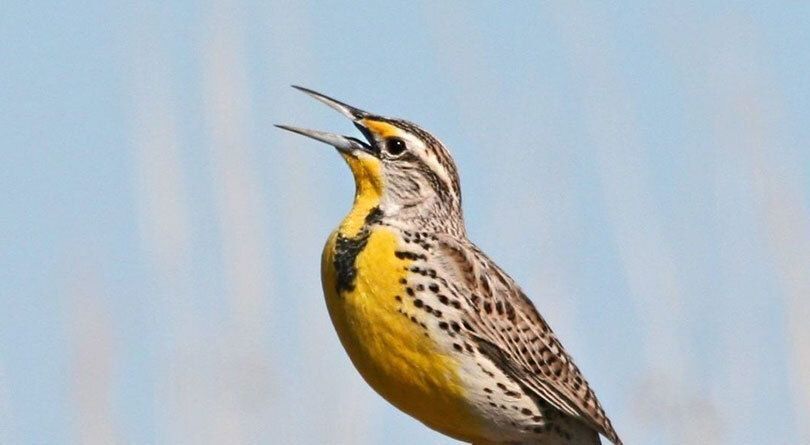
But let’s not write off open habitats entirely. A long day in a grassland on a sunny day requires lots and lots of water. But even short trips can prove fruitful, especially if you’re stopping by at dawn or dusk when bird activity picks up. (Birds dodge the full noon sunlight, too.) And consider less conventional ways to enjoy the sun while seeing birds. A bike ride on the Keystone Trail offers a steady breeze to keep you cool, along with the sights and sounds of Red-winged Blackbirds, Dickcissels, Eastern Meadowlarks and more making use of grassy habitats bordering the path — plus Cliff Swallows nesting on the bridges.
Keep safety first when searching for birds this summer. And spare a thought for the wildlife that has to stay outside in all weather. A warming world isn’t making things any easier on them. Heat waves are particularly hard on young birds of all species. If you enjoy the company of birds this summer, consider returning the favor to them in some way. In urban areas, planting native species — especially oaks and other shade trees where appropriate — can mitigate climate change by reducing surface temperatures and slowing stormwater runoff. You can make nest boxes more heat-resistant by locating them out of full sun, painting them white, or using a double roof to insulate the interior. Try reducing your own carbon emissions and working with others to push for renewable energy and stopping the use of fossil fuels. Birds and people alike depend on summer. Keeping temperatures from reaching extremes will make the warm season better for all of us.


