
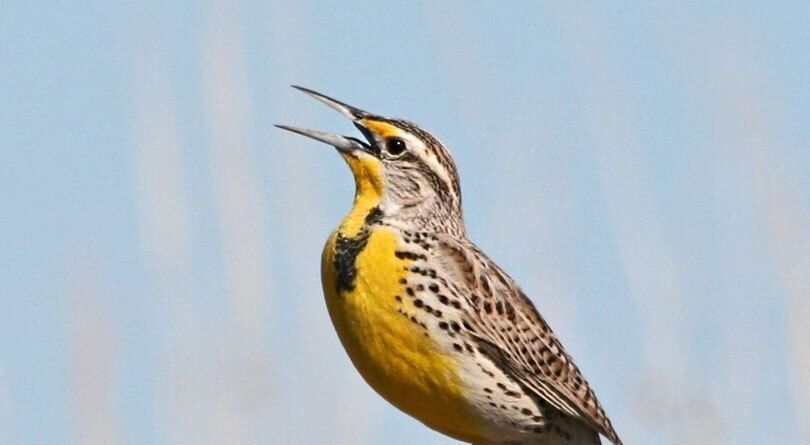
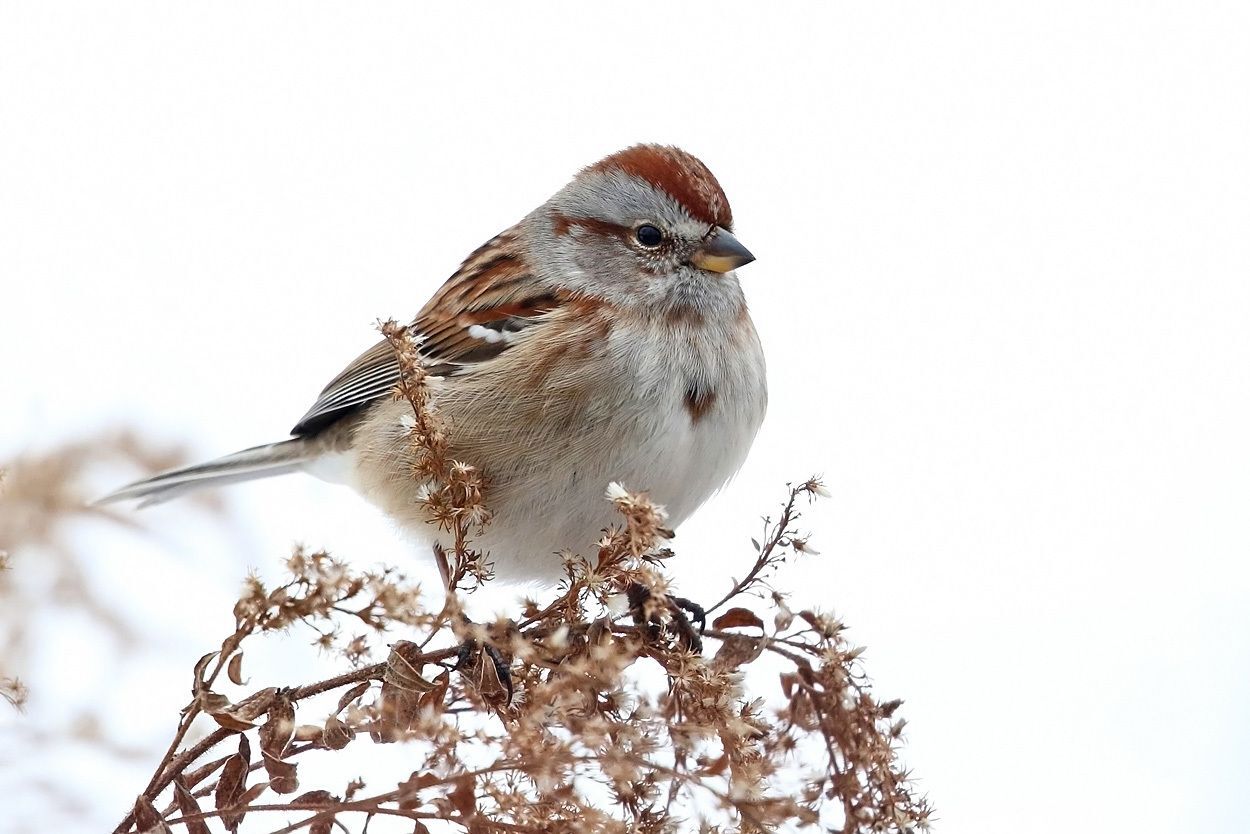
The American Tree Sparrow is a charming bird cursed with a confusing name. European settlers named it due to its resemblance to the Eurasian Tree Sparrow, but they nest on the ground and mostly search for their food on the ground, too. Their most distinctive feature, which has little to do with trees, is the little dark dot on their otherwise plain white breasts. That dot can quickly distinguish it from the many other streaky brown sparrows out there in winter, especially when an American Tree Sparrow pops up on a fenceline and shows off its feathers on a cold, snowy day.
The bird’s name also gives a vague impression of widespread abundance — “American” being quite nonspecific. While American Tree Sparrows are currently widespread in North America, they are fast losing their abundance. Breeding Bird Survey data from Canada indicate an 87% decrease in the population. They face threats both in their northern breeding range (loss of habitat due to climate change; pollution) and in the places they spend their winters, including Nebraska. Here, losing habitat to agricultural development and predation by outdoor cats could have significant impacts on the number of birds able to return north next summer to breed. By providing good habitats for sparrows and other birds, and by keeping cats indoors, each of us can take a small but meaningful action in support of American Tree Sparrows.
Other sparrows to look and listen for include Dark-eyed Juncos (a.k.a. “snowbirds”), White-throated Sparrows (singing “Old Sam Peabody, Peabody, Peabody!”), and Harris’s Sparrows (another fast-declining species with an unhelpful name). Though sparrow appreciation might seem like a niche interest, spend some time with sparrows and see what it awakens in you. They’re tough, resourceful birds at home in a little backyard hedge or a thicket between two fields. The world through the eyes of a sparrow becomes a place of unexpected opportunity and places to take shelter from Nebraska’s brutal winds. How can birds so small survive winters so rough? With a little more help from us, even more of them might make it through.
Highlights of November & December Birds
Waterbirds
- Snow Geese
- Northern Shoveler
- Gadwall
- American Wigeon
- Northern Pintail
- Green-winged Teal
- Canvasback
- Redhead
- Ring-necked Duck
- Lesser Scaup
- Bufflehead
- Common Goldeneye
- Hooded Merganser
- Common Merganser
Landbirds
- Bald Eagle
- Winter Wren
- Pine Siskin
- Dark-eyed Junco
- American Tree Sparrow
- Fox Sparrow
- Harris’s Sparrow
- Rusty Blackbird


