
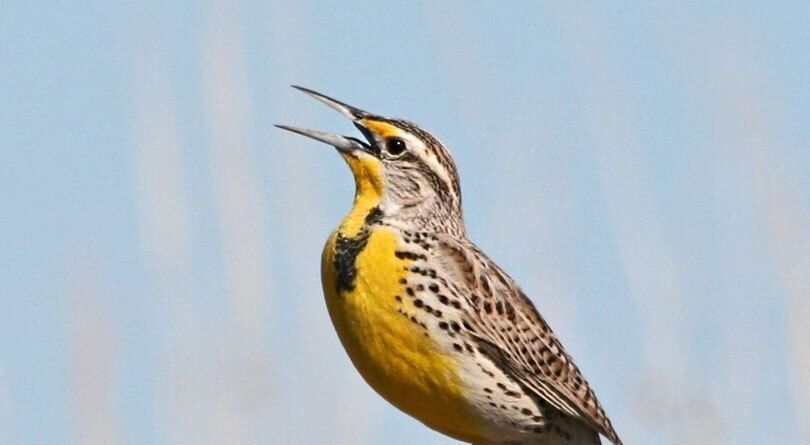
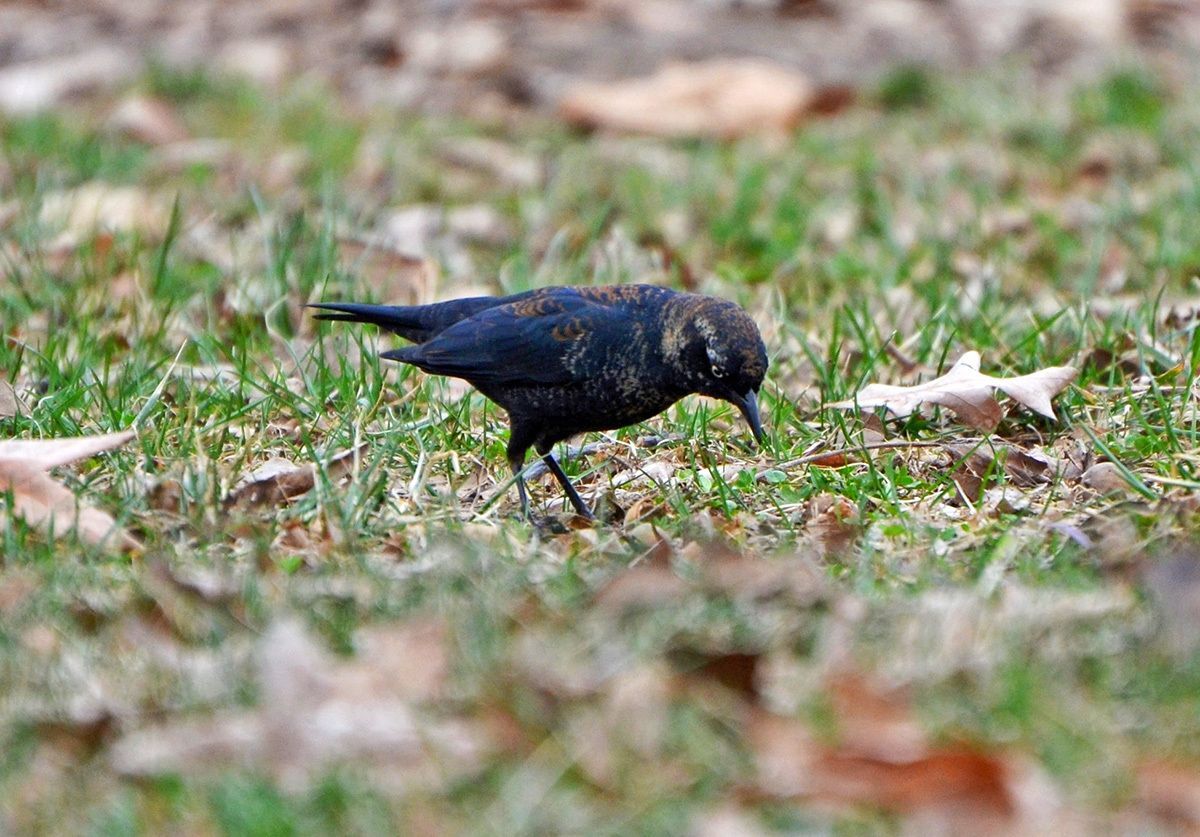
Birds like this Rusty Blackbird depend on dormant and larval insects found in leaf litter to make it through the winter. Photo by Andy Reago and Chrissy McClarren
As the festive month of December approaches, the change in season also marks the end of fall migration for the birds. In Nebraska, the last birds to migrate through are largely sparrows and blackbirds. This time of year also marks the presence of Nebraska’s overwintering species — birds that pass through or stay in the region during the winter. Many ducks and songbird species fall into this category. Birding outdoors in the winter months isn’t for everyone, so if you prefer to stay cozy inside drinking hot chocolate and birding from your window, here are several ways you can help the migratory and overwintering birds in your own backyard!
One of the easiest ways to support birds during the winter is keeping your backyard messy! Dead trees, fallen tree limbs, dead seed heads of last season’s flowers, and fallen leaves are all beneficial to the birds. The dead trees and leaves are home to tasty insects for the birds. Dead trees and large tree limbs also often serve as shelter for many smaller birds, especially when those chilly winds blow through. Providing places for birds to shelter is an easy way to help out.
If you are creative and crafty, you might want to build a roost house for overwintering birds. Roosting is when birds, often grouped together, find a place to sleep or shelter. A roost house is different from a typical next box because it provides ample space for multiple birds to rest (although birds sometimes use nest boxes for roosting, too — so clean them out after the breeding season!) The National Audubon Society and the Cornell Lab of Ornithology both provide great online resources on roosting boxes, what makes a good roosting house, where to put them, and more.
Lastly, as the famous Mary Poppins song goes, “Feed the Birds” is another great way to support birds in the cold months. UNL Extension recommends that bird feeders for winter feeding can come out as early as mid-September. Bird feeders with an overhanging roof are useful for keeping the seeds fresh during rainy or snowy conditions. Suet mixes are another popular option for winter feeding. Suet is usually sold as a small brick and hung from a tree branch in a wire cage. Finally, fresh water is a great resource to provide for the birds, especially when unfrozen water is hard to find. Just make sure to clean your bird feeders and bird baths regularly to prevent the spread of disease.
So whether or not you’re hiking to spot birds on chilly trails, there are many ways to support the birds in your own backyard. Keeping your backyard messy, placing roosting houses, and setting out bird feed are all ways to help migratory and overwintering birds make it through the season.


