
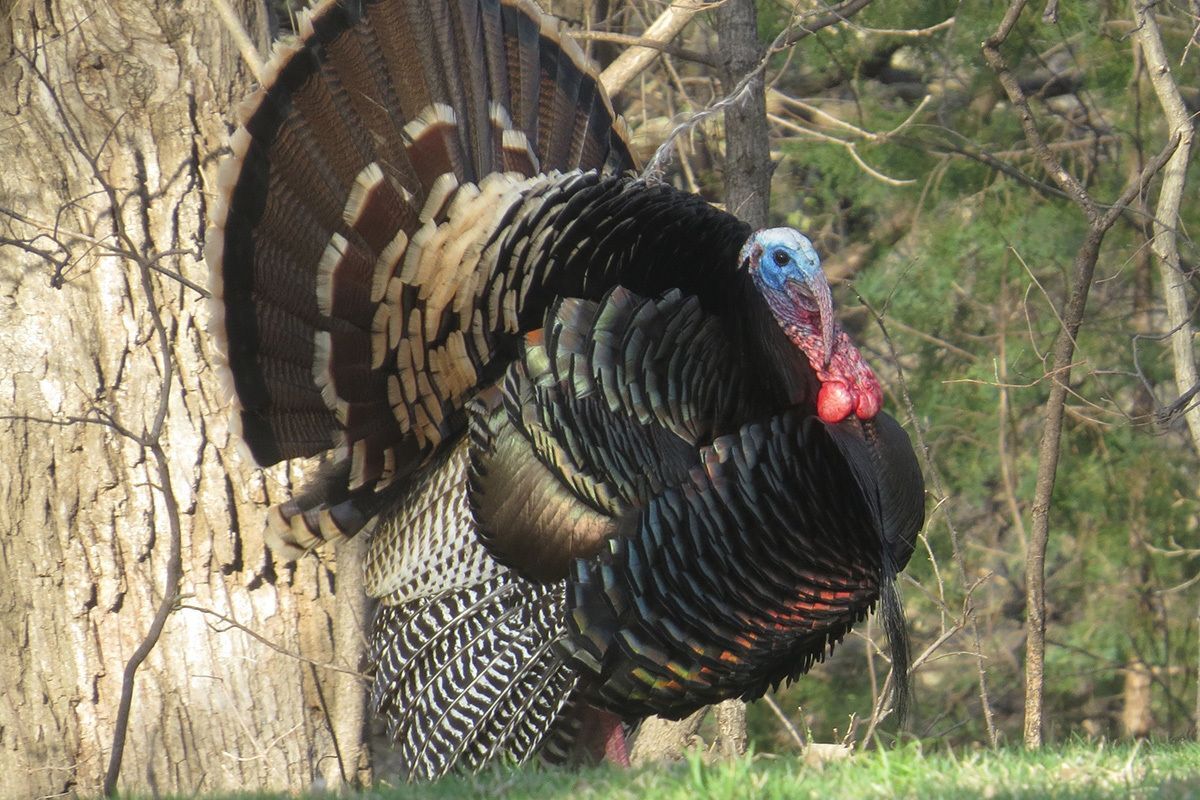
Photo: Wild Turkey by Bill Bossman
Birds have been at the center of human activity throughout history. Whether it is egret feathers on ladies’ hats, pigeons carrying messages in war time, eagles emblazoned on national emblems, or turkeys ending their lives on Thanksgiving platters, birds sometimes seem to be at the center of everything. In Ten Birds That Changed the World, (Basic Books, 2023) author Stephen Moss takes us on a journey across centuries, examining how human life has been impacted by birds. The author has carefully chosen ten different types of birds from nearly every continent to illustrate how birds have changed life on our planet. What he reveals is not always pretty. From war, to agriculture, to evolutionary biology, to fashion and food, birds are at the middle of it all.
The author is a British writer, environmentalist, and television producer. The book reflects his roots in the U.K. — it takes a while for an American reader to become accustomed to his spelling, word usage, and worldview. However, one is soon lost in his narrative of not only how birds changed the world, but more importantly, how humans have changed the lives of birds and the environment, which supports both avians and humans. He writes of the dodo, a bird driven to extinction in the 17th century, “It’s easy to think that as a result of the extinction of the dodo, we are now sadder and wiser, but there’s a lot of evidence to suggest that we are merely sadder and better informed.”
Is there a path from being “merely sadder and better informed” to using that sadness and that access to information to actually do something to change humanity’s destruction of the environment that supports both birds and humans? Ten Birds That Changed the World does not provide an easy solution, nor does it really provide hope that easy solutions are on the horizon. What the author does is to present the reader with historic stories of ravens, pigeons, turkeys, dodos, finches, cormorants, egrets, eagles, sparrows, and penguins and their struggles to survive in a world dominated by humans. Some of those birds have adapted successfully. Others struggle to hold on. Some have disappeared entirely. The ending of the story for both birds and humans is still being written. Hopefully, learning the histories of these ten birds will motivate us to help add a few chapters to that story as we work toward that hopeful happy ending.


