
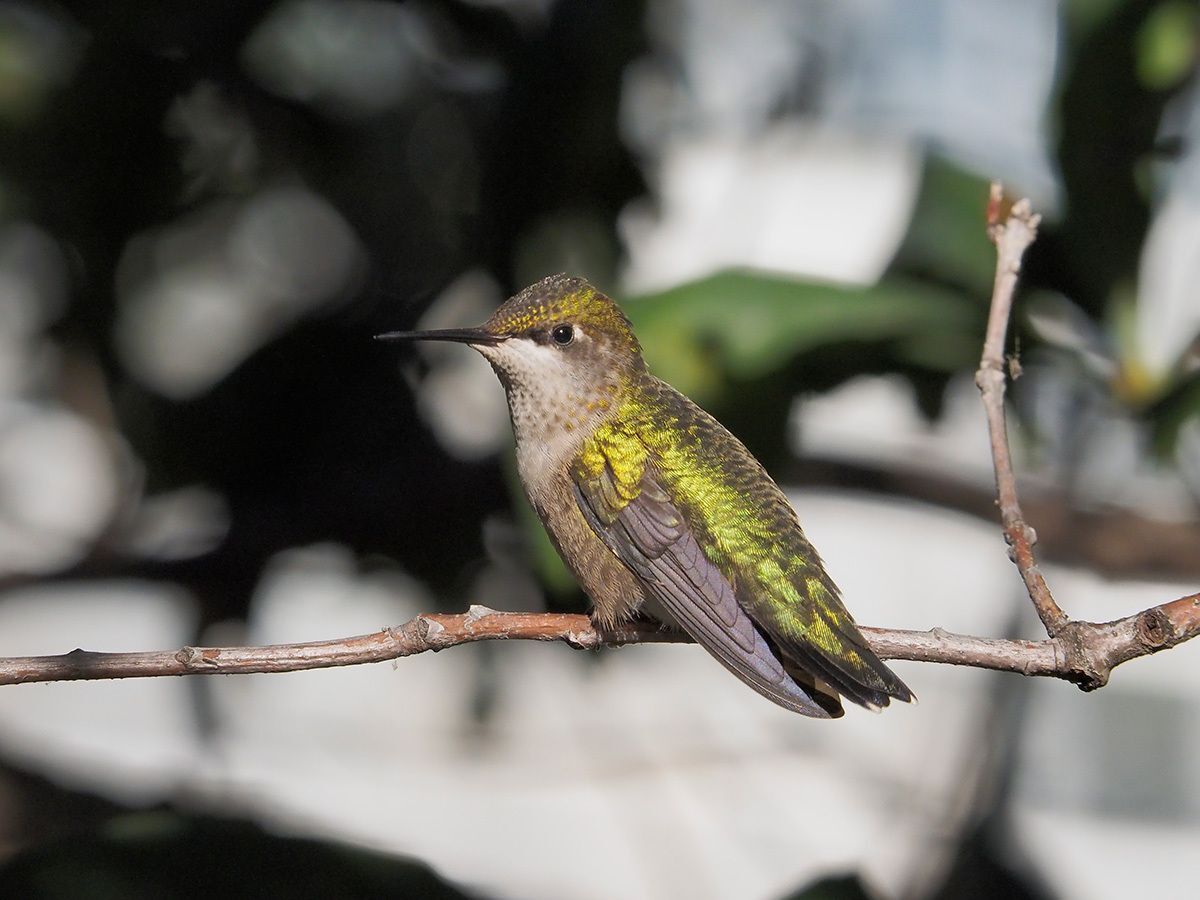
Photo: Ruby-throated Hummingbird by Scott Schryver
The first Saturday of every September is National Hummingbird Day — this year, it falls on September 5. It’s a great day to learn more about these tiny birds, where we can find them in Nebraska, and how they contribute to our ecosystems. There is surprising diversity among hummingbirds: 366 species are found throughout the Americas. Although there aren’t nearly as many species recorded in Nebraska, there are still a few hummingbirds you can spot in your backyard.
For Nebraskans, the most common hummingbird is the Ruby-throated Hummingbird. These hummingbirds breed in eastern North America and migrate from Canada, through Nebraska, to the warm weather of Mexico and Central America. Ruby-throated Hummingbirds begin to migrate through Nebraska as early as May and pass through in the fall as late as October. Their fall migration peaks in early to mid-September. If you spot a hummingbird and want to identify it, there are a few things you can look for. Adult Ruby-throated hummingbirds are easy to spot by their green, emerald feathers. The males have a vibrant red throat, hence the name ‘Ruby-throated’.
Another migratory hummingbird spotted most often in Western Nebraska is the Rufous Hummingbird. This hummingbird appears in the late summer months through the fall. The male Rufous Hummingbird is easily identifiable by its rusty orange feathers and orange-red neck. The Broad-tailed, Calliope, and Costa’s Hummingbirds are rare sights in Nebraska, but have been recorded during fall migration as well.
Whether common species or rare, hummingbirds in Nebraska depend on a variety of food sources. Many native plants in Nebraska provide nectar to hummingbirds, such as beebalm, goldenrod, jewelweed, and milkweed. Planting native flowers in your backyard can help provide a food source for hummingbirds and other pollinators. Like butterflies or bees, hummingbirds also pollinate plants and contribute to the health of our ecosystem. In addition to nectar, they eat small insects like gnats and mosquitoes, which are an important source of protein in their diet.
Although hummingbirds are small, they play an important role in nature. National Hummingbird Day is a great reminder to appreciate these unique birds, not just for their beauty but also for their contributions to the world around us.


