
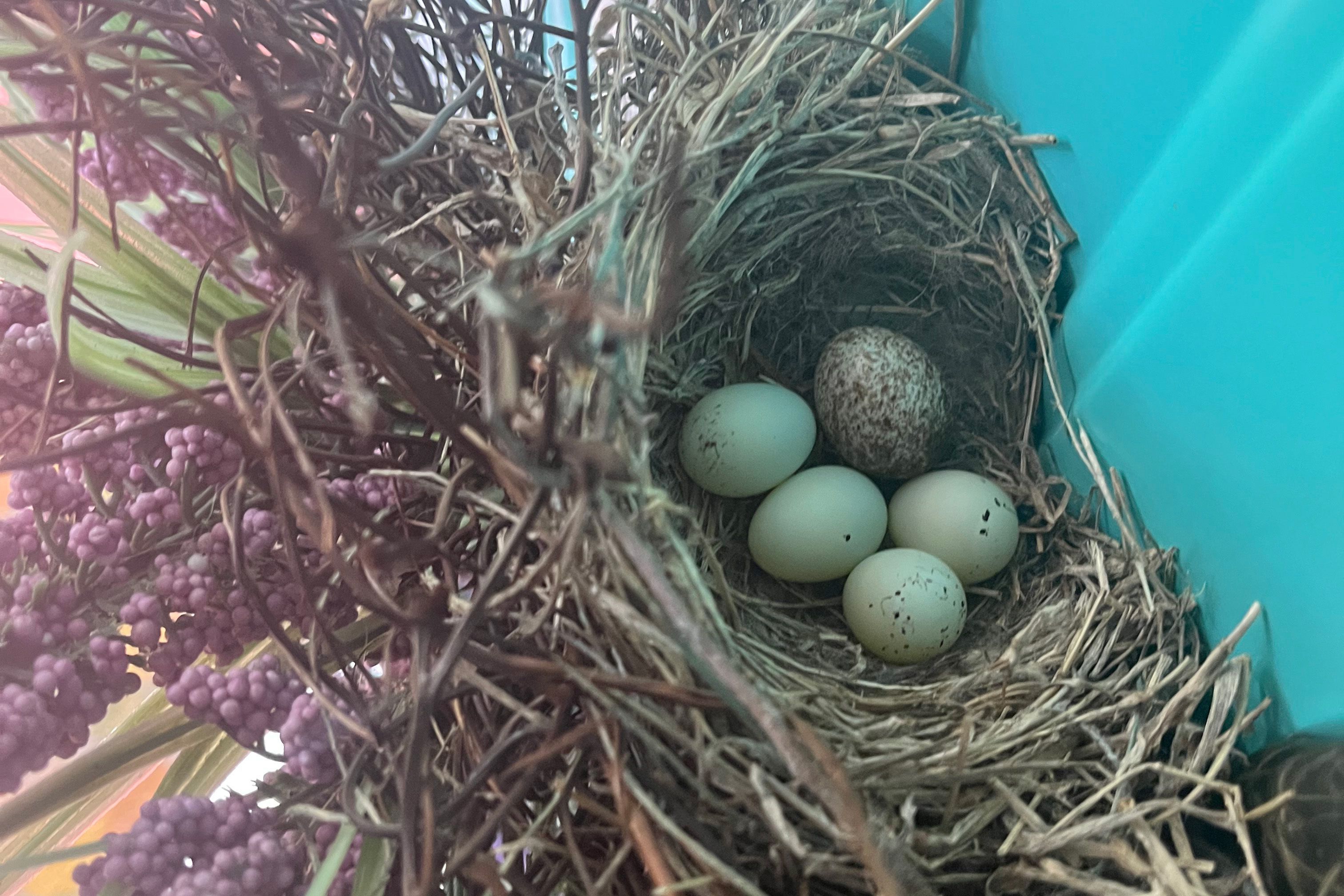
When we put up our winter wreath on the front door, I remembered what happened with our summer wreath earlier this year. An itty-bitty House Finch nest appeared, nestled in the upper part of the wreath. First there was one little blue egg, then two, three, and four. Each time we came home, we’d frighten one of the parents off the nest, but they soon returned once the door was closed. The drama heightened when we noticed a speckled cowbird egg in the bunch. The nestlings all hatched, but the larger cowbird nestling disappeared a few days in (unclear what happened, but I did notice a local feral cat hanging out underneath the nest around that same time…)
I posted updates on the finch family’s progress on Instagram. Friends and family asked for updates — How are they doing? Do you think they’ll make it? For wildlife, there are no guarantees of success, so I really wasn’t sure if I was sharing updates to a tragedy or a success.
For several days, the four chicks could barely squeeze their bodies into the tiny nest. And I’m sure they were working their parents to the bone getting them enough food. Then one day, I opened the door to take a quick peek at the finches, and with an explosion of fluttering past my face, all four finch youngsters flew to the maple tree in the front yard, never to return to the nest. They had fledged!
It strikes me that the finches took the wreath much more seriously than we did. To us, it was just a bit of decoration. To the finches, this was habitat, and a clever place to avoid many potential predators, as birds of prey and squirrels couldn’t possibly reach them when they were tucked into the wreath.
Our pocket gardens, backyard habitats, restored patches of prairie, and other urban green spaces can be like that, too. The thin strip of prairie plants in our yard was just a casual experiment until I noticed Monarch caterpillars chowing down on swamp milkweed and Mourning Doves nesting among the wildflowers. What starts out as a fun project begun in the spirit of “worth a shot” or “better than nothing” can become a valuable resource to real wildlife — serious business for their survival.
In her article on the Christmas Bird Count, Hannah Miller shares how she and her family became involved in the annual count, and how over the years it grew into a strong tradition. As birds face the cold months, let’s ask ourselves: what can we try out, even just for fun, that could grow into something bigger? Is it planting the dormant roots of a tree or shrub in winter, joining us for the CBC, or reaching out to a local business about protecting birds from window strikes? Just see what happens. What if it goes well? What next?


